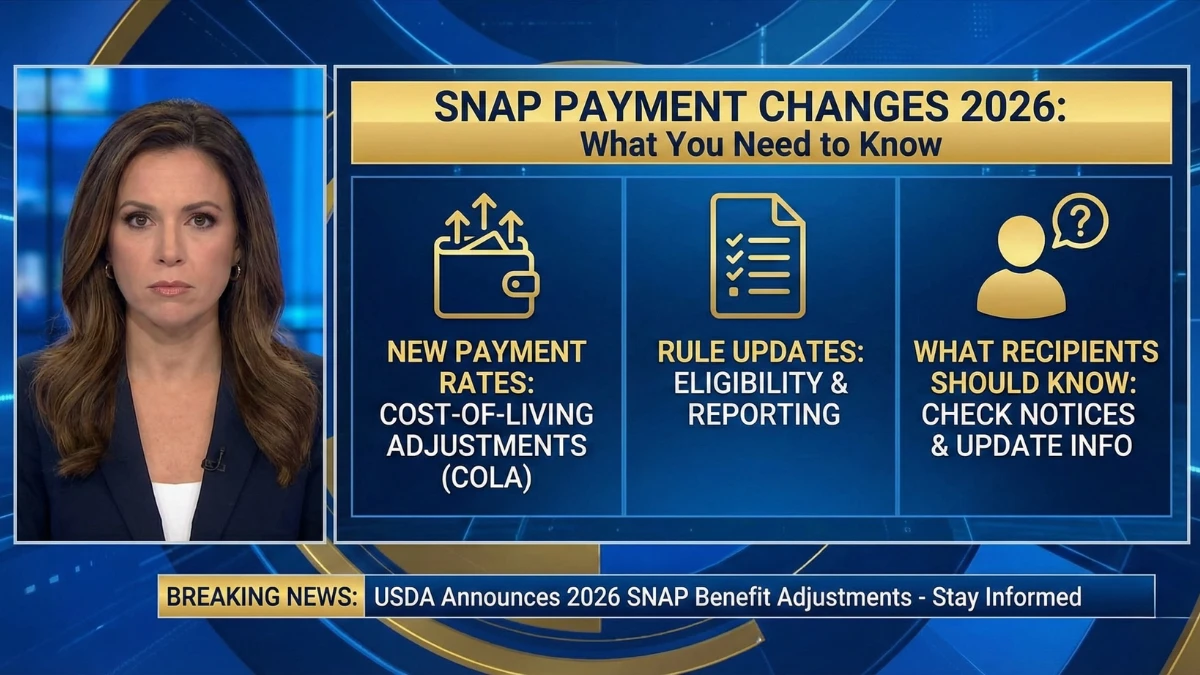
As 2026 begins, millions of households are looking for clarity on SNAP payment changes, including updated benefit amounts, eligibility rules, and how monthly payments may shift. SNAP benefits adjust periodically to reflect inflation, cost-of-living updates, and federal policy decisions. This article explains what has changed for SNAP in 2026, how new payment rates are determined, and what beneficiaries should expect under rules administered by the U.S. Department of Agriculture.
What SNAP Payment Changes in 2026 Mean
SNAP (Supplemental Nutrition Assistance Program) updates typically reflect cost-of-living adjustments (COLA) and rule refinements aimed at aligning benefits with food price inflation and household needs.
| Change Area | What’s Updated in 2026 |
|---|---|
| Maximum Benefit Amounts | Adjusted for inflation |
| Income Limits | Updated thresholds |
| Standard Deductions | Revised amounts |
| Work Requirements | Clarified or enforced |
| Benefit Calculation | Updated cost assumptions |
New SNAP Payment Rates for 2026
SNAP benefit amounts vary by household size, income, and location. In 2026, maximum allotments reflect updated food cost data, meaning many households may see slight increases, while others may see no change depending on income adjustments.
Why SNAP Payments Differ by State
While SNAP is federally funded, states administer the program. Benefit timing, employment exemptions, and certain deductions can vary, which is why monthly SNAP payments differ across states.
Eligibility Rule Updates in 2026
SNAP eligibility continues to depend on:
- Household income and size
- Allowable deductions (housing, utilities, childcare)
- Work requirements for able-bodied adults without dependents
- Citizenship or eligible non-citizen status
Rule clarifications in 2026 focus on verification accuracy and compliance, not benefit reductions.
Work Requirements and Exemptions
Work requirements remain a key factor for certain adults. However, exemptions apply for seniors, disabled individuals, caregivers, and those in qualifying hardship areas.
How and When SNAP Payments Are Issued
SNAP benefits are distributed monthly via EBT cards, with payment dates determined by each state. The 2026 changes do not alter standard payment schedules, only benefit calculations.
What Recipients Should Do
Recipients should:
- Review state-issued SNAP notices
- Report income or household changes promptly
- Monitor EBT balances after adjustment periods
- Use official state portals for updates
Key Points to Remember
- SNAP payments are adjusted for inflation in 2026
- Benefit amounts vary by household and state
- Eligibility rules remain largely unchanged
- Work requirements still apply for some adults
- Payment schedules stay the same
Conclusion
The SNAP payment changes in 2026 reflect updated cost-of-living data and eligibility refinements rather than a complete program overhaul. While many households may see adjusted benefit amounts, SNAP continues to operate under the same core rules, with states administering payments based on federal guidelines.
Disclaimer
This article is for informational purposes only and does not constitute legal or benefits advice. SNAP payment amounts, eligibility rules, and schedules are subject to federal and state regulations. Recipients should verify details through their state SNAP agency or official government communications.