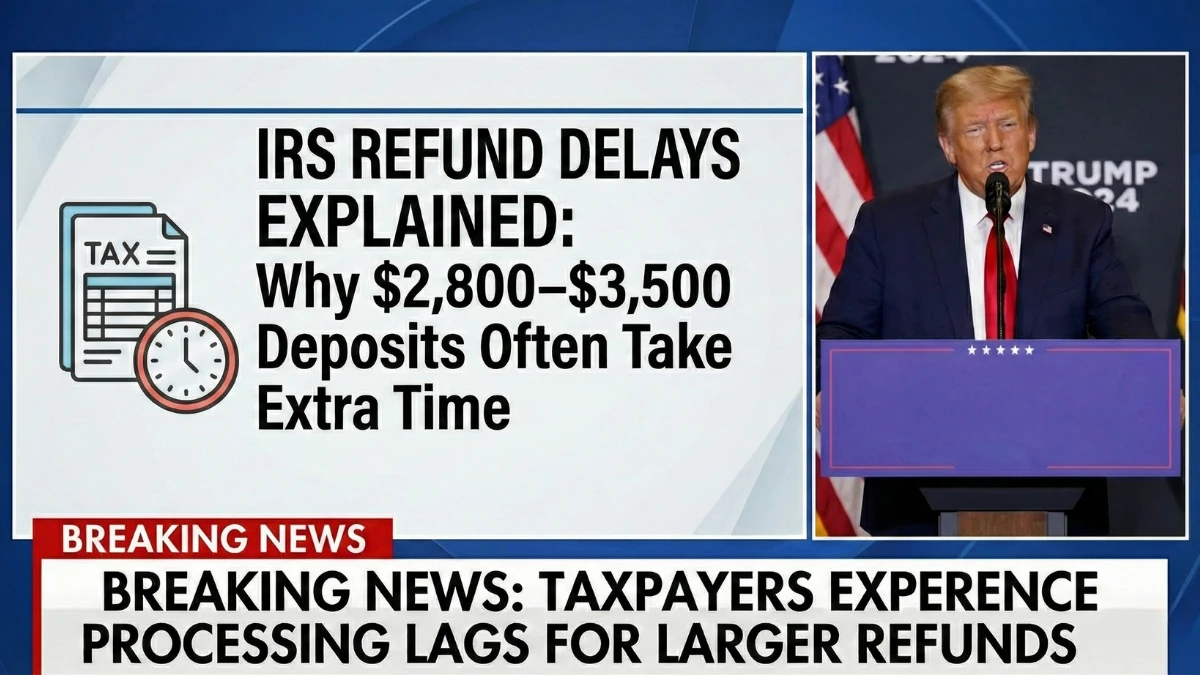
Many taxpayers expecting IRS refund deposits between $2,800 and $3,500 are noticing longer-than-usual processing times, even when filing early and choosing direct deposit. These delays are usually not random and are triggered by specific review steps within the IRS system. This article explains why refunds in this range are more likely to face additional checks, what those reviews involve, and what filers should realistically expect.
Which Agencies Handle IRS Refund Reviews
Refund processing and review are managed by the Internal Revenue Service, with payments released through the United States Department of the Treasury once reviews are cleared.
| Entity | Responsibility |
|---|---|
| IRS | Return review and refund approval |
| U.S. Treasury | Issues refund payments |
| IRS Systems | Automated and manual checks |
| Banks | Final deposit posting |
| Taxpayers | Provide accurate return data |
Why Refunds Between $2,800 and $3,500 Face Extra Review
Refunds in this range often include refundable tax credits, income adjustments, or withholding corrections, which are more likely to trigger verification checks. The dollar amount itself is not the cause, but the components that create refunds of this size increase review probability.
What Triggers an IRS Deposit Review
Common triggers include mismatches between reported income and IRS records, refundable credits such as credits tied to dependents, changes from prior-year filings, or identity verification flags designed to prevent fraud.
Automated Review vs Manual Review
Automated reviews are cleared quickly when data matches IRS records, while manual reviews require an IRS agent to verify details, which significantly increases processing time even when no error exists.
Why Direct Deposit Does Not Prevent Delays
Choosing direct deposit speeds up payment after approval, but it does not bypass IRS review stages. Refunds under review must be fully cleared before any funds are released.
How Long These Reviews Usually Take
Most additional reviews resolve within several weeks, but some cases can extend longer depending on workload, verification requirements, and whether the IRS requests additional information.
What Taxpayers Should Do While Waiting
Taxpayers should monitor official IRS tracking tools, avoid filing duplicate returns, respond promptly to any IRS notice, and allow standard review timelines before assuming a problem.
- Refunds of $2,800–$3,500 often include verified credits
- Extra IRS checks do not mean the refund is denied
- Manual reviews significantly extend timelines
- Direct deposit does not skip IRS review steps
- Official IRS tools provide the most accurate status
Conclusion
Delays affecting $2,800–$3,500 IRS refunds are usually the result of standard review procedures designed to verify accuracy and prevent fraud, not payment problems. Once reviews are completed, deposits are released normally, even if timing differs from smaller refunds.
Disclaimer
This article is for informational purposes only and does not constitute tax or financial advice. IRS refund timing, eligibility, and review procedures are subject to federal regulations and official IRS processes. Taxpayers should rely on authorized IRS communications for case-specific guidance.