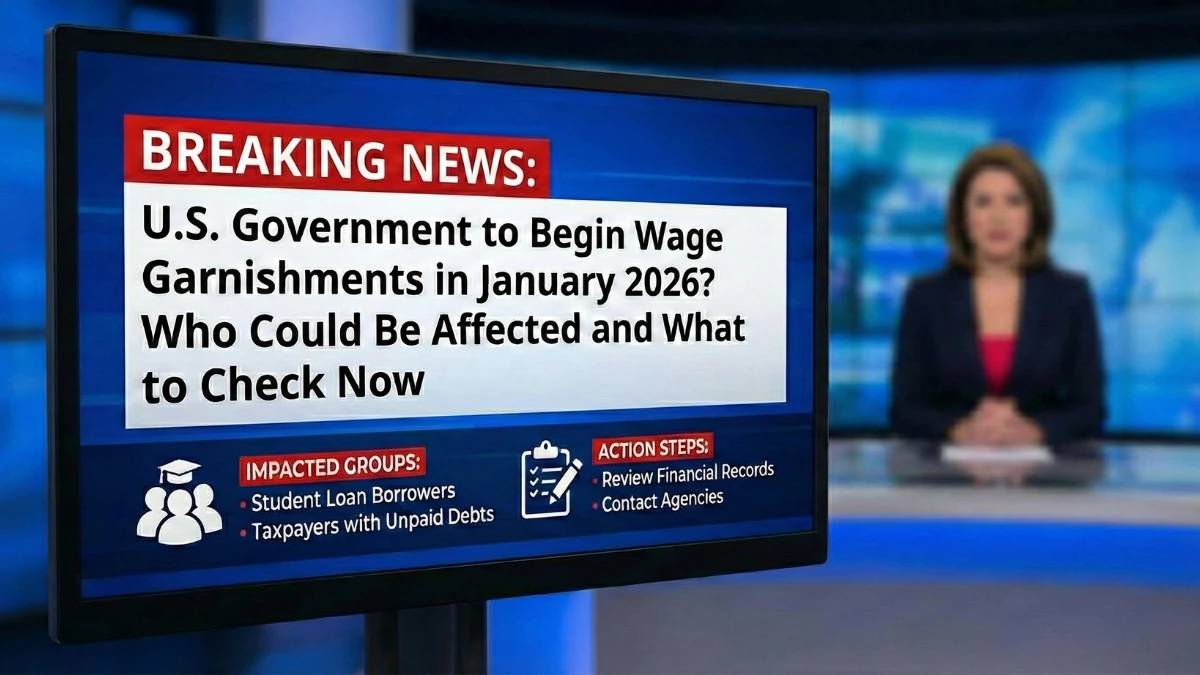
Claims that the U.S. government will begin large-scale wage garnishments starting January 2026 are raising concern among workers who fear sudden paycheck reductions. While wage garnishment is a real federal enforcement tool, not everyone is affected and there is no universal “new list” applying to all taxpayers. This article explains what is actually happening, who may face garnishment, how the process works, and what the Internal Revenue Service and other agencies require before taking such action.
What Is Wage Garnishment and Why It Happens
Wage garnishment allows the government to legally withhold a portion of earnings to recover unpaid debts after repeated notices and due process. It is not automatic and does not apply to compliant taxpayers.
| Garnishment Type | Trigger |
|---|---|
| Federal Tax Debt | Unpaid IRS balance after notices |
| Student Loans | Defaulted federal loans |
| Child Support | Court-ordered obligations |
| Court Judgments | Federal legal rulings |
| Other Federal Debts | Treasury Offset actions |
Is January 2026 a New Nationwide Garnishment Start Date?
No. There is no blanket program launching in January 2026 that automatically garnishes wages for everyone. Garnishments occur case by case after legal requirements are met. The January 2026 timing often appears in headlines because of resumed enforcement cycles and policy normalization, not a new mass action.
Who Is Most Likely to Be Affected
Individuals at risk typically include those who have:
- Ignored multiple IRS or federal notices
- Long-standing unpaid tax balances
- Defaulted federal student loans
- Unresolved child support obligations
- Failed to respond to legal warnings
If you are current on taxes and debts, you are not on any list.
How the Garnishment Process Actually Works
Before wages are garnished, agencies must issue written notices, provide appeal rights, and allow time to resolve or dispute the debt. Employers are instructed to withhold only legally permitted amounts, not entire paychecks.
Can You Stop or Avoid Wage Garnishment
Yes. Options may include payment plans, hardship relief, settlement programs, or loan rehabilitation depending on the debt type. Early action dramatically reduces the chance of garnishment.
Common Scams to Watch Out For
Scammers often exploit garnishment fears by threatening immediate wage seizure via phone or email. The real government does not threaten sudden garnishment without prior written notice.
ONE Bullet-Point Section (KEY FACTS)
- No mass wage garnishment begins January 2026
- Garnishment applies only after legal notice
- Most workers are not affected
- Debts must be unresolved and overdue
- Scam threats are common
Conclusion
While wage garnishment is a real enforcement tool, there is no universal January 2026 list targeting ordinary workers. Garnishments affect only individuals with unresolved federal debts after due process. Staying informed, responding to official notices, and addressing debts early are the best ways to avoid any paycheck disruption.
Disclaimer
This article is for informational purposes only and does not constitute legal or financial advice. Wage garnishment rules, thresholds, and enforcement timelines vary by debt type and individual circumstances. Always verify information through official government agencies or consult a qualified professional.