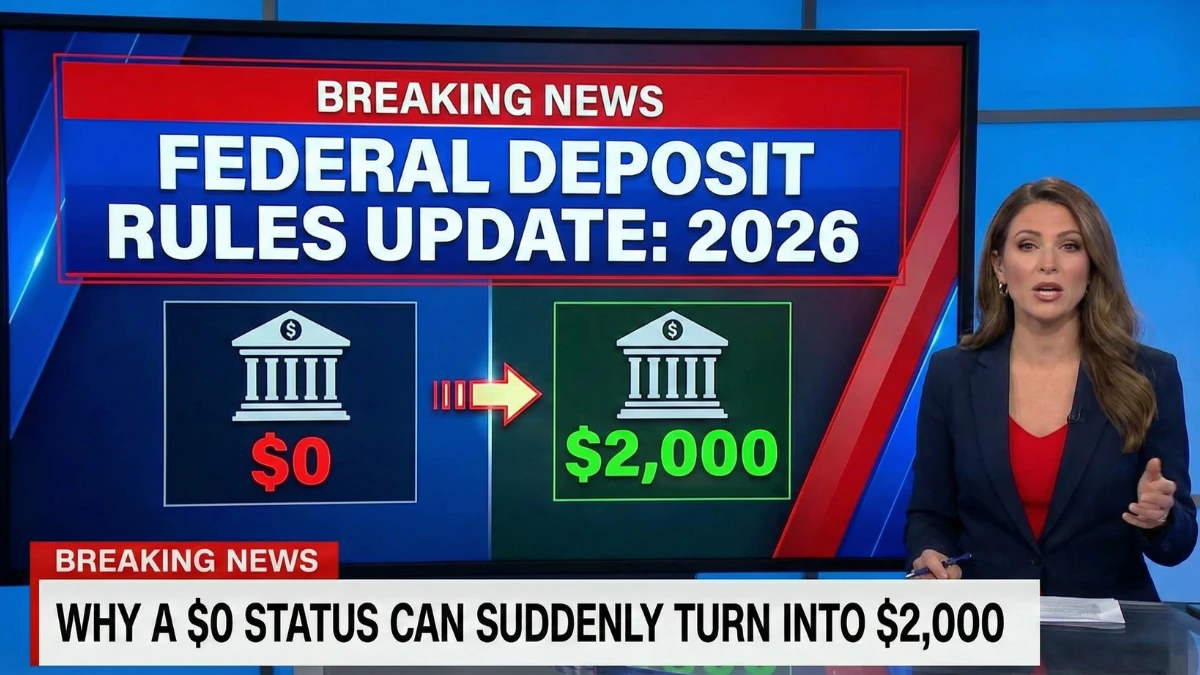
In 2026, many taxpayers checking their refund status are seeing a confusing pattern where an account shows $0 pending, only to later receive a $2,000 federal deposit without warning. This sudden change is not a system error or surprise payment, but the result of updated federal processing and verification rules. This article explains why the $0 status appears, what changes in 2026 made this more common, and how the Internal Revenue Service releases refunds after verification is complete.
What the $0 Refund Status Really Means
A $0 status does not mean your refund was denied or canceled. It usually indicates that the IRS has not finalized the refund amount yet or is temporarily holding the payment during processing checks.
| Status Indicator | What It Signals |
|---|---|
| $0 Showing | Refund not finalized |
| Processing | Automated checks running |
| No Update | Verification still pending |
| Approved | Deposit queued |
| Sent | Funds released to bank |
What Changed in Federal Deposit Rules for 2026
In 2026, the IRS expanded verification-first processing, meaning refund amounts may not display until all income, credit, and identity checks are completed, resulting in longer $0 display periods.
Why $0 Can Suddenly Turn Into $2,000
Once verification clears, the system updates all at once, releasing the full approved refund. This creates the impression of a sudden deposit even though processing was ongoing behind the scenes.
Why $2,000 Is a Common Final Amount
Refunds around $2,000 often result from:
- Standard tax withholding overpayments
- Refundable credits
- Reconciled adjustments
- Joint filing calculations
These amounts frequently fall into verification thresholds.
Why No Advance Warning Is Given
The IRS does not send alerts when a refund moves from verification to release. Status tools update once daily, and banks post deposits independently, which removes visible transition steps.
Does This Mean the Refund Was Manually Approved
Not always. Many refunds clear automated verification, but the updated system delays display until approval is complete, even without human review.
What Taxpayers Should Do While Seeing $0
Taxpayers should:
- Avoid filing amended returns
- Wait for official IRS notices
- Monitor bank alerts
- Check status once daily only
Repeated actions can slow processing.
When Action Is Actually Required
Action is needed only if:
- An IRS notice requests documents
- The status shows “sent” but no deposit arrives after several business days
Key Points to Remember
- $0 does not mean denial
- Verification hides amounts temporarily
- $2,000 deposits release all at once
- Status tools are not real-time
- Most cases resolve automatically
Conclusion
The 2026 federal deposit rule updates explain why a $0 refund status can suddenly become a $2,000 deposit without warning. This shift reflects tighter verification and delayed display—not surprise payments or system errors. Understanding this process helps taxpayers stay calm while refunds move through final approval.
Disclaimer
This article is for informational purposes only and does not constitute tax or financial advice. Refund timing and amounts depend on individual circumstances, IRS processing rules, and bank posting schedules. Always rely on official IRS tools and notices for accurate information.