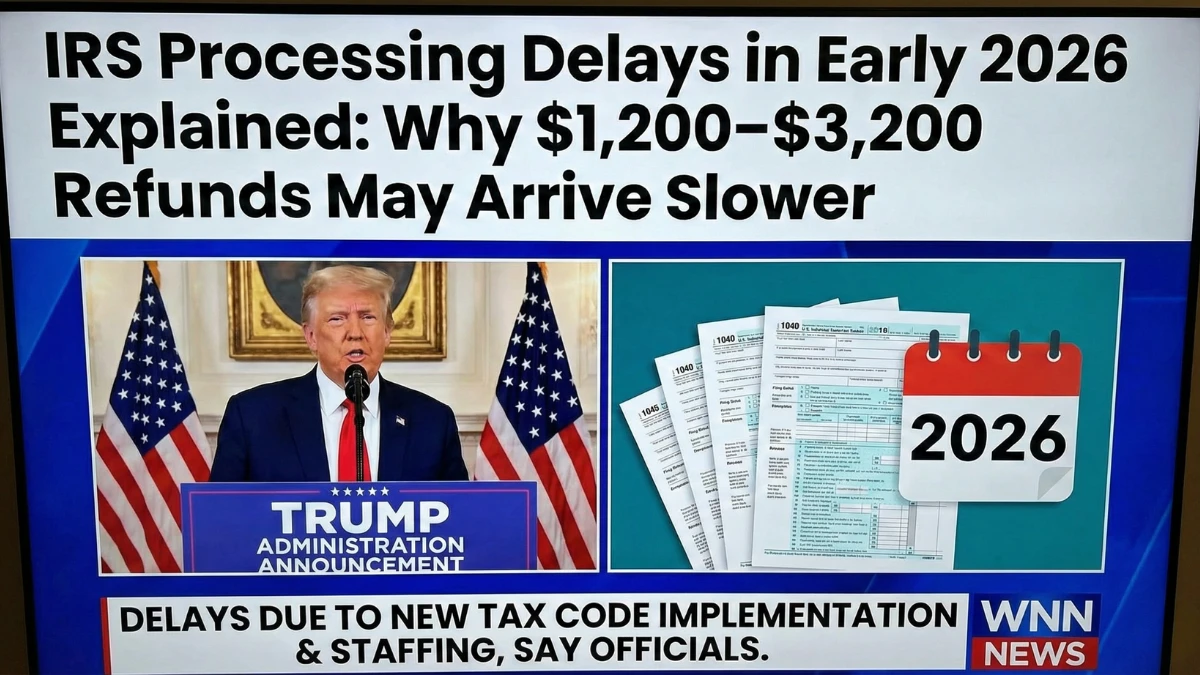
Early 2026 has brought noticeable IRS processing delays, especially for taxpayers expecting refunds between $1,200 and $3,200, leading to frustration and confusion about slow-moving deposits. These delays are not random and do not indicate lost or denied refunds. This article explains the real reasons behind slower payouts, how federal processing works, and what filers should understand while waiting for deposits from the Internal Revenue Service.
Why Early 2026 Refund Processing Is Slower
At the start of the tax season, the IRS handles a surge of new filings while still clearing prior-year cases, which naturally slows refund timelines—particularly for returns requiring extra verification.
| Delay Factor | How It Slows Refunds |
|---|---|
| High Filing Volume | System backlogs form quickly |
| Refundable Credits | Extra eligibility checks |
| Income Matching | Employer data verification |
| Fraud Screening | Additional security reviews |
| Manual Processing | Human review adds time |
Why Refunds Between $1,200 and $3,200 Are Most Affected
Refunds in the $1,200–$3,200 range often include refundable credits or adjusted withholding, placing them in a higher-review category than very small refunds. These returns are more likely to pause in verification queues.
Automated vs Manual IRS Processing
Many refunds clear automated systems quickly, but once a return triggers review flags, it moves to manual processing, where IRS staff verify details before releasing funds—adding days or weeks to timelines.
IRS Approval Does Not Equal Instant Deposit
Even after approval, refunds must move through banking networks, where posting times vary. Some banks display pending entries before releasing funds, making delays appear longer.
Does a Slow Refund Mean There Is a Problem
In most cases, no. Slower movement usually means additional verification, not rejection. The IRS typically contacts taxpayers only if action is required.
What Taxpayers Should Do While Waiting
Taxpayers should monitor official IRS status tools, avoid filing unnecessary amendments, and wait through the standard processing window before contacting support.
When to Contact the IRS
Reaching out is recommended only if the refund status shows “sent” and no deposit appears after several business days, or if an official IRS notice requests action.
Key Points to Remember
- Early-season delays are common
- $1,200–$3,200 refunds often face extra checks
- Manual review slows deposits
- Bank posting adds additional delay
- Most refunds are eventually released without issues
Conclusion
IRS processing delays in early 2026 are largely driven by volume, verification requirements, and fraud-prevention steps—especially for refunds between $1,200 and $3,200. While slow movement can be frustrating, these delays are usually temporary and part of normal tax-season operations.
Disclaimer
This article is for informational purposes only and does not constitute tax or financial advice. Refund timing depends on individual circumstances, IRS processing, and bank posting practices. Always rely on official IRS tools and guidance for accurate information.